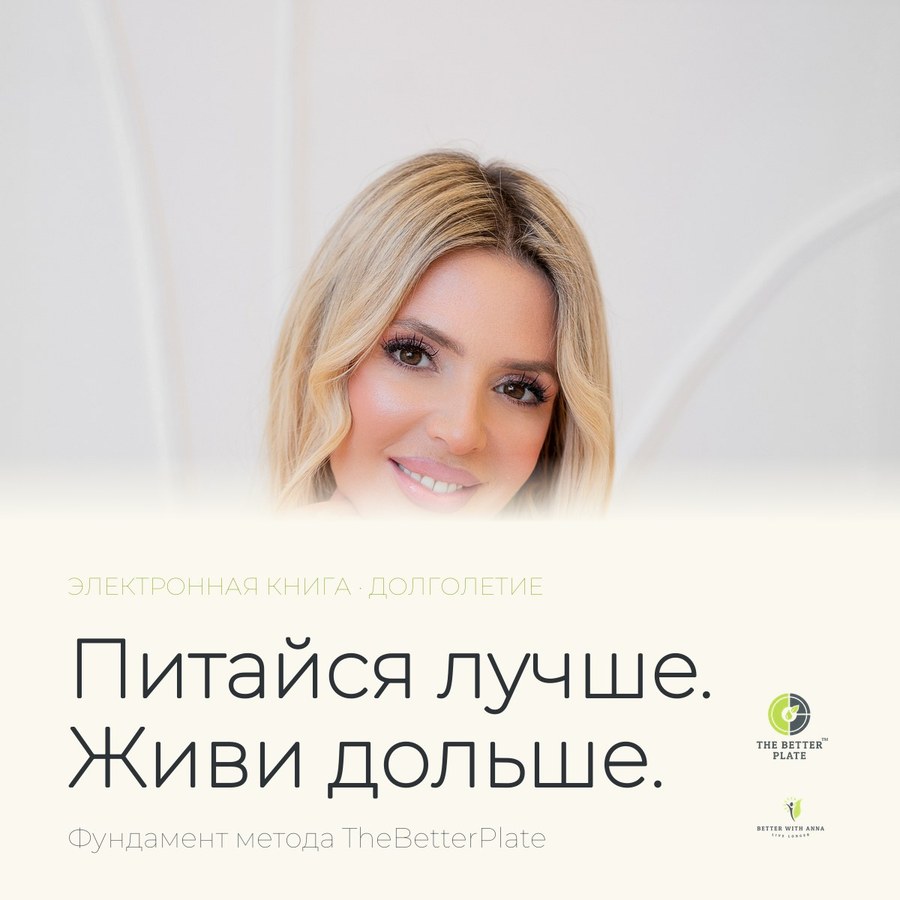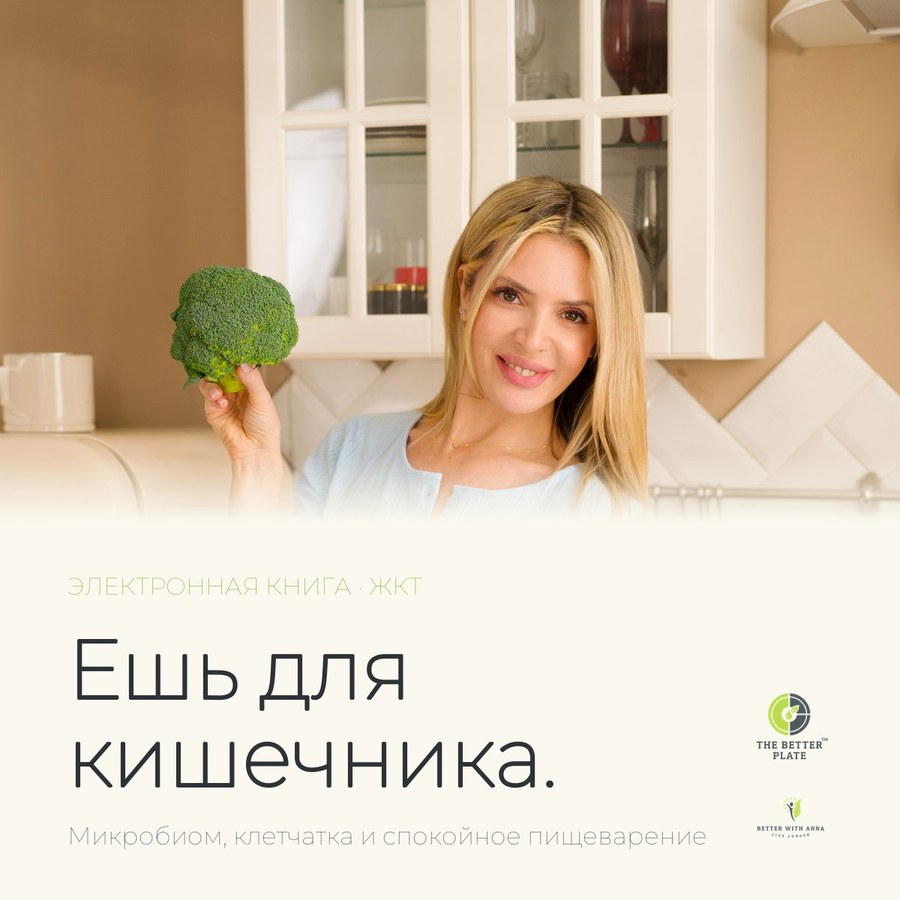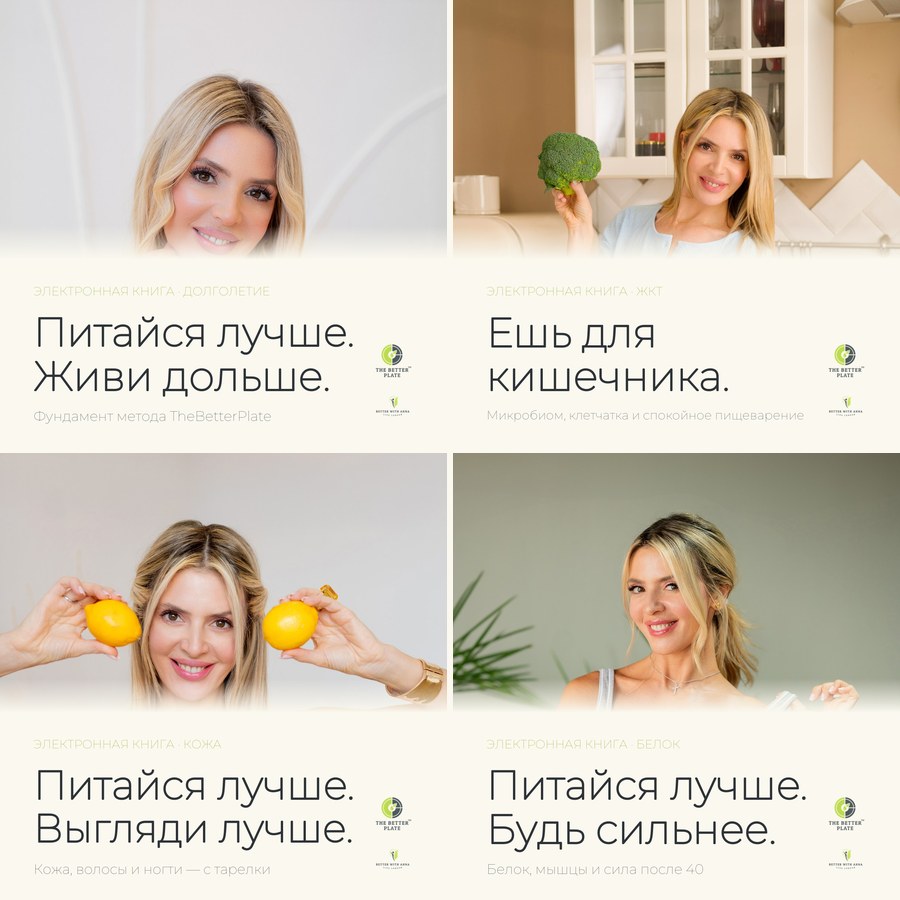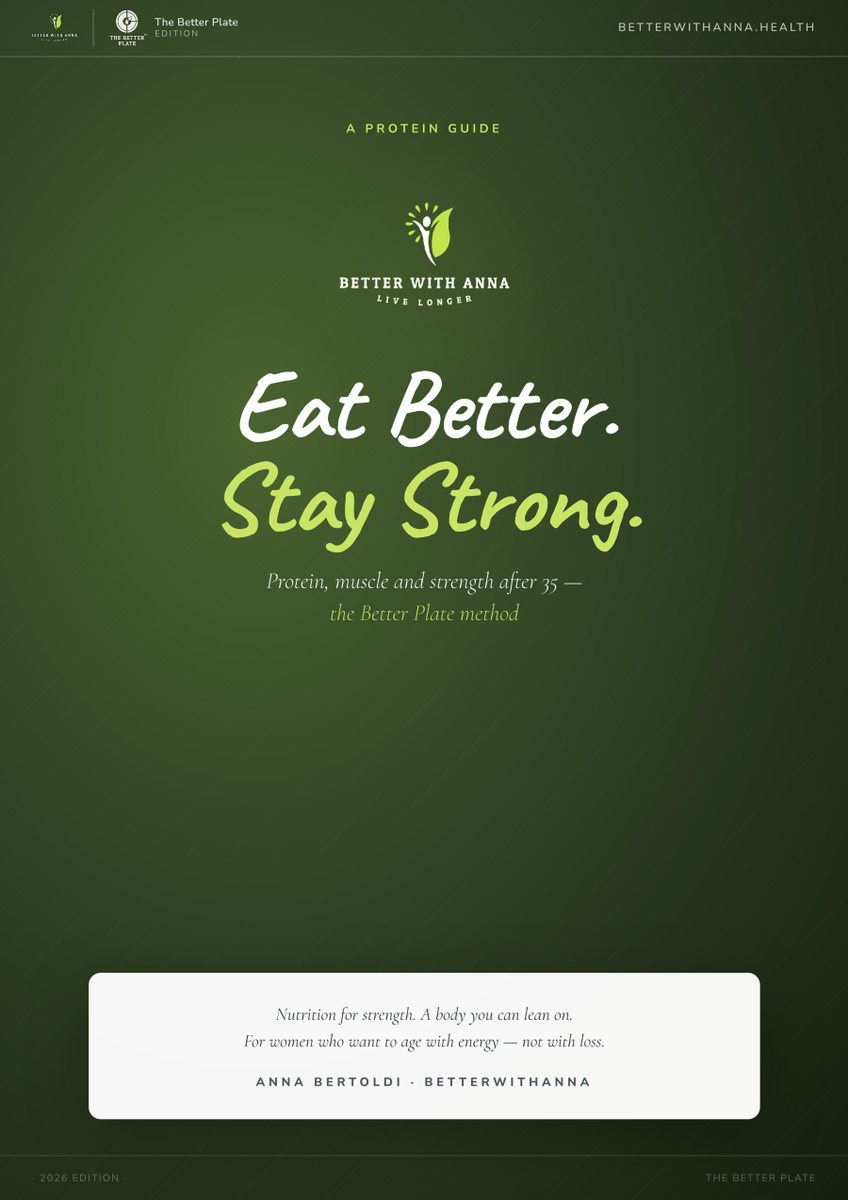
Eat Better. Stay Strong.
This book is no longer sold on its own — it comes as part of the Full Library, together with the other three.
See the Full Library →PDF · instant delivery after payment · yours forever in your personal account
This is a book about protein — Edition 04 of The Better Plate, written for the woman of 35+ for whom "the way it always worked" has stopped working. You will finish it not with general advice but with a specific number of grams for your own weight and life phase, a structure of four protein windows across the day, and eight lab tests that show whether the protein you eat is actually being absorbed and not merely swallowed. Every claim rests on peer-reviewed research — 61 references at the back, so that you can check me.
Women aged 35–60 for whom "the way it always worked" has stopped working — especially those in perimenopause, in menopause, on HRT or on GLP-1 medication; the book is deliberately not written for athletes, bodybuilders, men, or women under 30.
The book exists in three languages at once — Russian, English and German. All three editions are part of the Full Library.
Contents
- PART I · Why protein becomes load-bearing after 35Thirteen short chapters on what shifts in a woman's body after 35 — and why protein stops being a "nice-to-have" nutrient and becomes the one everything else leans on.
- CHAPTER 01 · Muscle is an organMuscle as the body's largest endocrine organ: the myokines it releases — IL-6, irisin, BDNF — and why it takes up roughly 80 % of the glucose entering your blood after a meal.
- CHAPTER 02 · What shifts in perimenopauseOestrogen as a protein-sparing hormone, the 0.5–1 % of muscle mass lost each year after 40 when nothing is done about it, and a separate sidebar on protein in the GLP-1 era.
- CHAPTER 03 · Anabolic resistanceWhy the same portion of protein fires muscle synthesis less effectively at 50 than at 25, and the three levers that answer it: the dose per meal, leucine, and strength training.
- CHAPTER 04 · Sarcopenia and frailty: not a disease, a 30-year arcThe EWGSOP2 consensus and the "Muscle mass arc, 30 → 80 years" infographic with its two scenarios: no intervention, and strength training together with protein.
- CHAPTER 05 · Strength = longevityGrip strength as a predictor: the PURE and UK Biobank studies, a female reference range in kilograms by age, and a list of what actually raises grip strength.
- CHAPTER 06 · Bone and protein: a myth it's time to let goWhy "protein leaches calcium from bone" did not hold up in randomised trials, and the trio that works for a woman 50+: protein, calcium and vitamin D together.
- CHAPTER 07 · Protein and immunityAntibodies, immunoglobulins and cytokines as proteins, the role of albumin, and a checklist of six signs that protein is chronically low.
- CHAPTER 08 · Protein and satietyThe thermic effect of protein, its effect on PYY, GLP-1, cholecystokinin and ghrelin, and the "protein leverage" hypothesis.
- CHAPTER 09 · IGF-1: a divisive hormoneAn honest reading of the dispute over animal protein and IGF-1: the Levine and Longo data, Volpi's objections, and what it means for a woman of 35–60.
- CHAPTER 10 · Protein quality: DIAAS, not "complete vs. incomplete"The DIAAS scale (FAO, 2013) charted across nine foods — from whey isolate at 1.25 down to wheat at 0.45 — and the principle of complementarity.
- CHAPTER 11 · Leucine: the threshold that fires muscle synthesisThe leucine threshold of 2.5–3 g after 50, and a table of leucine in real portions of nine foods, from whey isolate to cooked lentils.
- CHAPTER 12 · Distribution matters more than the daily sumThe pulsed nature of muscle synthesis, the morning gap, the pre-sleep window, and the day charted as 30 · 40 · 30 · 20 g.
- CHAPTER 13 · Sleep, stress, muscle: the forgotten leverHow short sleep and cortisol cancel out the protein you have eaten, and the five-point minimum that protects muscle.
- MYTHS · Eight myths about protein — unpackedKidneys, liver, "incomplete" plant protein, "more is always better", "only 30 g at a time", protein before bed, collagen, and "I don't train".
- PART II · Your number, your plateWe calculate the target, build the plate and read the labs: by the end of this part you have a concrete plan for your body, not "for women 35+" in general.
- CHAPTER 14 · Your number — calculate it now (+ continued: Targets table — by life phase)The "weight × factor" formula with its five factors from 1.2 to 2.0, and a ready-made targets table of seven life phases across six body weights from 50 to 80 kg.
- CHAPTER 15 · A protein breakfast — the only rule if you have oneWhy the morning window is the most vulnerable of the day, and seven protein breakfasts of 28–35 g, from cottage cheese with berries to a tofu scramble.
- CHAPTER 16 · The protein plate — structureThe plate with protein moved forward — ¼ protein, ½ plants, ¼ slow carbs plus added fats — and how it differs from the plate in Eat Better. Age Better.
- CHAPTER 17 · 30 / 40 / 30 / 20: four windows of the dayThe four-window protocol with exact times, grams and the purpose of each window, plus how to compress it into intermittent fasting.
- CHAPTER 18 · What counts as a portion of proteinA working reference across four plant families — legumes, nuts, whole grains and seeds — in grams per cup and per tablespoon, plus a closing line on animal protein.
- CHAPTER 19 · A protein check-up — eight lab tests (+ continued: Protein digestibility: why "eating it" isn't always getting it)Five baseline markers and three digestibility markers with their usual ranges, the signs of low stomach acid, what helps, and a sidebar with the basic and extended annual check-up.
- CHAPTER 20 · The plant path — honestlyThe three conditions under which 100+ g of quality protein a day is reachable on plants alone — complementarity, soy, and raising the total by 15–20 % — plus B12 and iron.
- CHAPTER 21 · The animal path — honestlyWhat the science knows category by category — fish, eggs, fermented dairy, poultry, unprocessed red meat and processed meat — and why the cooking method matters.
- CHAPTER 22 · Strength + protein: the pair that doubles the resultThe Morton and Forbes meta-analyses, and the minimum effective dose of strength training: two sessions a week of 20–30 minutes, 6–8 exercises, progression, and protein afterwards.
- ON ONE PAGE · The shape of a day — screenshot and keepA one-page cheat sheet: six windows of the day with times, food and grams, the five rules of the day, what to drink and what to track.
- PART III · Six families of proteinA food reference — what to eat, how to choose and what the science actually knows — read by the foods already in your life.
- FAMILY 01 · EGGS — Eggs: the most underrated breakfast / what the science now knowsDIAAS 1.13, the American Heart Association's 2020 advisory on dietary cholesterol, choline, vitamins D and B12, and how many eggs a day is sensible.
- FAMILY 02 · FISH — Fish and seafood: a double strike on ageing / why fish is the best animal proteinA table of six fish with protein per 130 g, omega-3 level and mercury level, and the minimum of 2–3 portions of oily fish a week.
- FAMILY 03 · DAIRY — Cottage cheese, kefir, Greek yoghurt: my favourite category / dairy: two different speedsWhey against casein, cottage cheese as the day's champion, the evening casein window, lactose and tolerance, and an honest look at the A1/A2 question.
- FAMILY 04 · LEGUMES — Lentils, chickpeas, beans: a staple of the Blue Zones / why in Sardinia and Okinawa they're eaten every dayWhat the data says about legumes and health, three complementarity pairs with their resulting DIAAS, and what to do if legumes cause bloating.
- FAMILY 05 · POULTRY AND MEAT — Poultry and red meat: quality over quantity / what the latest meta-analyses sayThe apparent contradiction between NutriRECS and the cohort data unpicked, the IARC's unambiguous position on processed meat, and a weekly breakdown of portions.
- FAMILY 06 · NUTS AND SOY — Nuts, seeds, soy: the plant-based complete protein / soy: rehabilitated, a myth debunkedMessina's technical review on phytoestrogens, the place of tofu and tempeh, and an honest warning: nuts are a companion, not a protein base.
- PART IV · Supplements — what works, what doesn'tWhey, casein, soy, pea, collagen, creatine, BCAA and EAA: what the science confirms — and where you can save your money.
- CHAPTER 23 · Whey, casein, soy, pea: when they make senseA table of six protein powders with their DIAAS, the best moment to take them and who they suit, plus what to look for on the label.
- CHAPTER 24 · Collagen — an honest conversationA systematic analysis of 23 RCTs: where collagen works, where the data is weaker, why it doesn't build muscle, and how to take it on top of your protein target.
- CHAPTER 25 · Creatine — rediscovered for women 35+The data on creatine and strength training in postmenopausal women, a second line of evidence on the brain, dosing without a loading phase, and a section on safety.
- CHAPTER 26 · Leucine, BCAA, EAA: what the science quietly knows about themWhy BCAA on their own don't build muscle, the two niches where EAA make sense, and the order of priorities: food first.
- PART V · 3 days of a protein restartThree days to set the habit into the body — no new recipes, just the structure and the goal for each window.
- DAY 01 · Day 1 — the foundationFour windows with a time, a protein figure and a leucine figure for each, the day's main shift, and what to do if you miss a window.
- DAY 02 · Day 2 — going deeperA plant-focused day with complementarity at lunch, a 20-minute home strength session in three rounds, and what counts as a normal reaction from the body.
- DAY 03 · Day 3 — making it stick. An "away-from-home" dayTactics for a café, a restaurant and a trip, broken down by cuisine, plus a ready-made script for the waiter.
- LIST + RULES · Shopping list + 5 rules after Day 3A shopping list across seven categories, the five rules that stay after the reset, and a repeat check-up in the fourth week.
- REFERENCES · References (two pages)61 numbered sources — peer-reviewed journals and official documents from the FAO, EFSA, WHO and IARC — behind every claim in the book.
Frequently asked
Can I buy just this book?
Not at the moment. The four books are sold together as the Full Library — which costs considerably less than buying them one by one.
What language is the book in?
Three at once: Russian, English and German. Every edition is included.